
Chamber music
Chamber music is where Ciciliani's list is densest in the 2000s, and where light first enters the scores. Map of Marble has a part for computer-generated light, Dromomania one for moving-head lamps. The two tables follow the split of the old work lists between instrumental chamber music and pieces with voice.
Instrumental chamber works
13 works
| Year | Title | Scoring | Duration |
|---|---|---|---|
| 2010 | Screaming my Simian Line | voice/electric violin, percussion and electronicspart of Suicidal Self Portraits | 10 min |
| 2010 | 80.1/173.3 (Mozartkugel) | string quartet and electronicslisted in concert programmes as 80.1/157.3 | 10 min |
| 2009 | Going to Hell | voice/electric violin, percussion and electronicspart of Suicidal Self Portraits | 13 min |
| 2009 | Black Horizon | four percussionists on two electric guitars in table-top position | 21 min |
| 2009 | Dromomania | two pianos, electronics and light design | 40 min |
| 2004/05 | Map of Marble | voice, percussion, live electronics and computer-generated lightopen length: 78 min, or longer by any multiple of 26 min | 78 min + |
| 2004 | Sequenzed Seizure | string quartet | ~30 min |
| 2004 | Signboard-Billboard | processed tenor saxophone and three percussionists | ~7 min |
| 2001/02 | Dindon | accordion and electric bass, each with electronicsnew version 2016: electric guitar, accordion and stompbox pedals | ~20 min |
| 2001 | Travelogues | three musicians, any instruments, and CDtwo versions | ~10 or ~20 min |
| 1999 | Gartenmusik | three musicians (violin/viola, alto/tenor saxophone, two percussion set-ups), tape and CD | ~14 min |
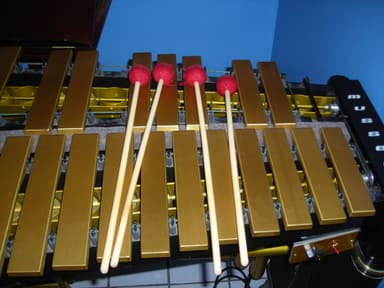
| 1998 | Feliques | piano and vibraphone | ~13 min |
| 1994/95 | Starring: Peater Mallet | three percussionists | ~40 min |
Black Horizon
In August 2009 Ciciliani finished a piece for four percussionists whose instruments are two electric guitars lying flat on a table, two players to each guitar. It was written for the Schlagquartett Köln. The first performance in the listings is by Bakin Zub at the Akademie der Künste in Berlin on 17 December 2010, in a concert of the Villa Aurora. The Schlagquartett Köln played it in Hamburg in February 2011.
After that the piece left the composer's own circle more often than any other. ICTUS played it at Maerzmusik in Berlin in 2015. Ensemble This | Ensemble That took it to the Lucerne Festival, to Basel, Zürich and Heidelberg. Decoder, Plus Minus, the Radar Ensemble and Ensemble S201 followed between 2016 and 2018. At the Darmstadt Summer Courses in 2016 it was played by James Feakes, Roberto Maqueda Dominguez, Nate Chivers and Fanis Gioles.
Håkon Stene and Ciciliani recorded it at ELAK in Vienna in August 2011 with the sound engineer Wolfgang Musil. The 21-minute recording is on Stene's CD Etude gone Badum (Ahornfelder).
Dromomania
Forty minutes for two pianos, electronics and light. Sonsoles Alonso and Moritz Eggert gave the first performance at November Music in Den Bosch on 14 November 2009 and played it in Venlo, Utrecht, Maastricht and Nuremberg within the next three weeks, then at Museum De Pont in Tilburg in February 2010. The Dutch weekly VPRO Gids wrote about it before the festival.
A ten-minute section with the title Dromomania (job of dying's done) is on the São Paulo compilation Palavras e Sons. The solo version for table-top guitar is listed with the solo works.
Map of Marble
Map of Marble (2004/05) for voice, percussion, live electronics and computer-generated light has an open length: 78 minutes, or 78 plus any multiple of 26. A seven-minute excerpt, recorded at STEIM in 2005 with Jannie Pranger (voice) and Arnold Marinissen (percussion), is on the Anthology of Dutch Electronic Music. The whole evening was given in Cologne in March 2007, in the Deutschlandfunk series Forum neuer Musik, and the fanzine Rauhnacht interviewed Ciciliani about it afterwards.
Strings, percussion and the rest
Sequenzed Seizure for string quartet, about half an hour long, was played by the Formalist Quartet at the Villa Aurora in Los Angeles in February 2010. 80.1/173.3 (Mozartkugel) for string quartet and electronics had its first performance on 17 October 2010 at Muziekpodium Zeeland in Veere, by the EnAccord String Quartet. They played it in Den Bosch the same week and at the Gaudeamus Festival in Utrecht in 2012; two further Dutch dates in October 2010 were cancelled.
Starring: Peater Mallet for three percussionists runs to about 40 minutes. Signboard-Billboard sets a processed tenor saxophone against three percussionists, and Gartenmusik mixes violin or viola, saxophones and two percussion set-ups with tape and CD. Both are on Voor het hooren geboren, the CD of his chamber music recorded by ensemble Intégrales.
Dindon (2001/02) was first for accordion and electric bass, each with electronics. In 2016 it got a new version for electric guitar, accordion and stompbox pedals, first played in Darmstadt by Primoz Sukic and Mirko Jevtovic.
Chamber works with voice
4 works
| Year | Title | Scoring | Duration |
|---|---|---|---|
| 2000 | Voor het hooren geboren | soprano and four instrumentsdated 2001 on the CD, 16:28 | ~16 min |
| 1996/97 | J&J | mezzo-soprano and soprano | |
| 1993 | Between the chords | two sopranos | |
| 1990 | ...rauscht der Brunnen... | two sopranos/mezzo |
The voice pieces come from the first half of the list: two-voice settings from the early 1990s and Voor het hooren geboren for soprano and four instruments, which gave its title to the ensemble Intégrales CD on Coviello Classics in 2006. There it runs 16:28.
Going to Hell and Screaming my Simian Line, both for voice and electric violin, percussion and electronics, belong to the cycle Suicidal Self Portraits and are described on the Bakin Zub page.