
Multimedia works and game pieces
The old work lists kept a separate box for multimedia, filled mostly with early pieces from 1989 to 2001 that are known by title and year. Ciciliani's later audiovisual work does not fit any of the old boxes, so it is gathered here too: pieces with live video, sensors, motion tracking and game systems, written between 2013 and 2018.
Early multimedia works
7 works
| Year | Title | Scoring | Duration |
|---|---|---|---|
| 2007 | Hansaharmonics | film music for a film triptych | |
| 2001 | Nulpunt | multimedia | |
| 1999 | Under the skin of a stroke I should have lost a gesture and a pose | multimedia | |
| 1999 | Vif...Vacuity, lists | multimedia | |
| 1996–2000 | Bosch tapped the gas pedal and the Caprice moved forward | electronic opera, with Jeff KowalkowskiCD 62:27 | 60 min |
| 1995 | Ohnemichkeinniemand | multimedia | |
| 1989 | Trimorphose | multimedia |
Bosch tapped the gas pedal and the Caprice moved forward is an electronic opera by Ciciliani and Jeff Kowalkowski, made between 1995 and 2000 and released on CD by No Harm Done in New York in February 2001. It runs 62:27. Pauline Oliveros summed it up as "two sound-poets – a bilingual incantation – a 19th c ghost at the wheel – a ritual to begin the new millennium". In May 2010 three of its sections, Vorspiel, Day Book and Numbers, were presented from the CD at REDCAT in the Disney Center in Los Angeles.
Hansaharmonics (2007) is music for a film triptych. It was part of Ciciliani's programmes at the Goethe-Institut in Los Angeles and at the Hilltown Festival in Ireland in 2009.
Game systems, sensors and live video
11 works
| Year | Title | Scoring | Duration |
|---|---|---|---|
| 2017/18 | Kilgore | two performers and a game system | |
| 2017 | Tympanic Touch | cello, double bass, live electronics and two live projections; later a version for two performers and a game system | |
| 2016 | Atomic Etudes | Monome grid controller | |
| 2016 | Audiodromo | percussion quartet, live electronics and live video | |
| 2015 | Steina | violin, live electronics, live video and laser | ~30 min |
| 2015 | Via | live electronics, live video and lighting | |
| 2014 | Formula minus One | electric violin, sensors, live electronics and live video | |
| 2014 | Homo Ludens II | motion-tracked dancer, string quartet and a computer game | |
| 2013 | Time Machine | sensor-equipped bass clarinet, live electronics and live video | |
| 2013 | Homo Ludens, expert level | string quartet, motion-tracked dancer, electronics and video | |
| 2013 | Homo Ludens | performer, four musicians and a video game |
Time Machine (2013), for sensor-equipped bass clarinet, live electronics and live video, was played by Matthias Müller in Graz and Zürich.
Homo Ludens
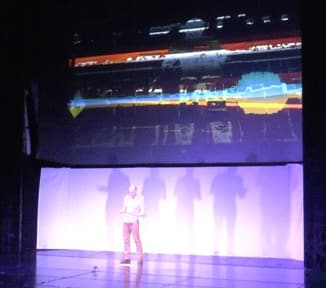
The title came back three times in 2013 and 2014. Homo Ludens is for a performer, four musicians and a video game. Homo Ludens, expert level, for string quartet, a motion-tracked dancer, electronics and video, came from a short-notice invitation of the ensemble des XX. Jahrhunderts and was first performed in Vienna on 7 December 2013, conducted by Peter Burwik. Homo Ludens II, described as cyber-music for a motion-tracked dancer, string quartet and a computer game, followed at the Wiener Konzerthaus on 10 December 2014.
With Barbara Lüneburg
Several of these pieces were made with the violinist Barbara Lüneburg, who also co-led the 2018 workshop on artistic research in Darmstadt with Ciciliani. Formula minus One, for electric violin, sensors, live electronics and live video, was first heard at the Darmstadt Summer Courses on 13 August 2014 and later at the Ultraschall festival in Berlin. Steina (2015), for violin, live electronics, live video and laser, lasts almost half an hour; a newly produced video of it with Lüneburg came out in September 2016.
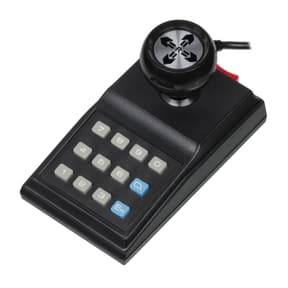
In Kilgore (2017/18), for two performers and a game system, she took the game controller in Tallinn in January 2018, while The Third Guy, a duo of electric guitar and percussion, played the piece in Brussels, Ljubljana and Graz.
Game elements and GAPPP
Game elements run through most of the later works listed above. From the end of 2015 they were also the subject of Ciciliani's research project GAPPP, Gamified Audiovisual Performance and Performance Practice, funded by the Austrian Science Fund.
In Via (2015), his solo for live electronics, live video and lighting, he borrowed elements from games to give the performance a particular feel: room for spontaneity inside an environment of strict rules. Atomic Etudes (2016) is played on a Monome, a grid of lit buttons, and was first performed at MuteFest in Helsinki on 24 November 2016.
Audiodromo (2016), for percussion quartet, live electronics and live video, was written for Ensemble This | Ensemble That, who gave the first performance at a portrait concert of his music in Basel on 30 April 2016. Tympanic Touch (2017) began as a piece for cello, double bass, live electronics and two live projections, first performed by Ensemble Schallfeld in Zadar in August 2017. In 2018 Szilard Benes and Gobi Drab played it in Vienna and Graz as a multisensorial piece for two performers and a game system.